
Fiberglass Aluminum Flagpoles for Dune Riding
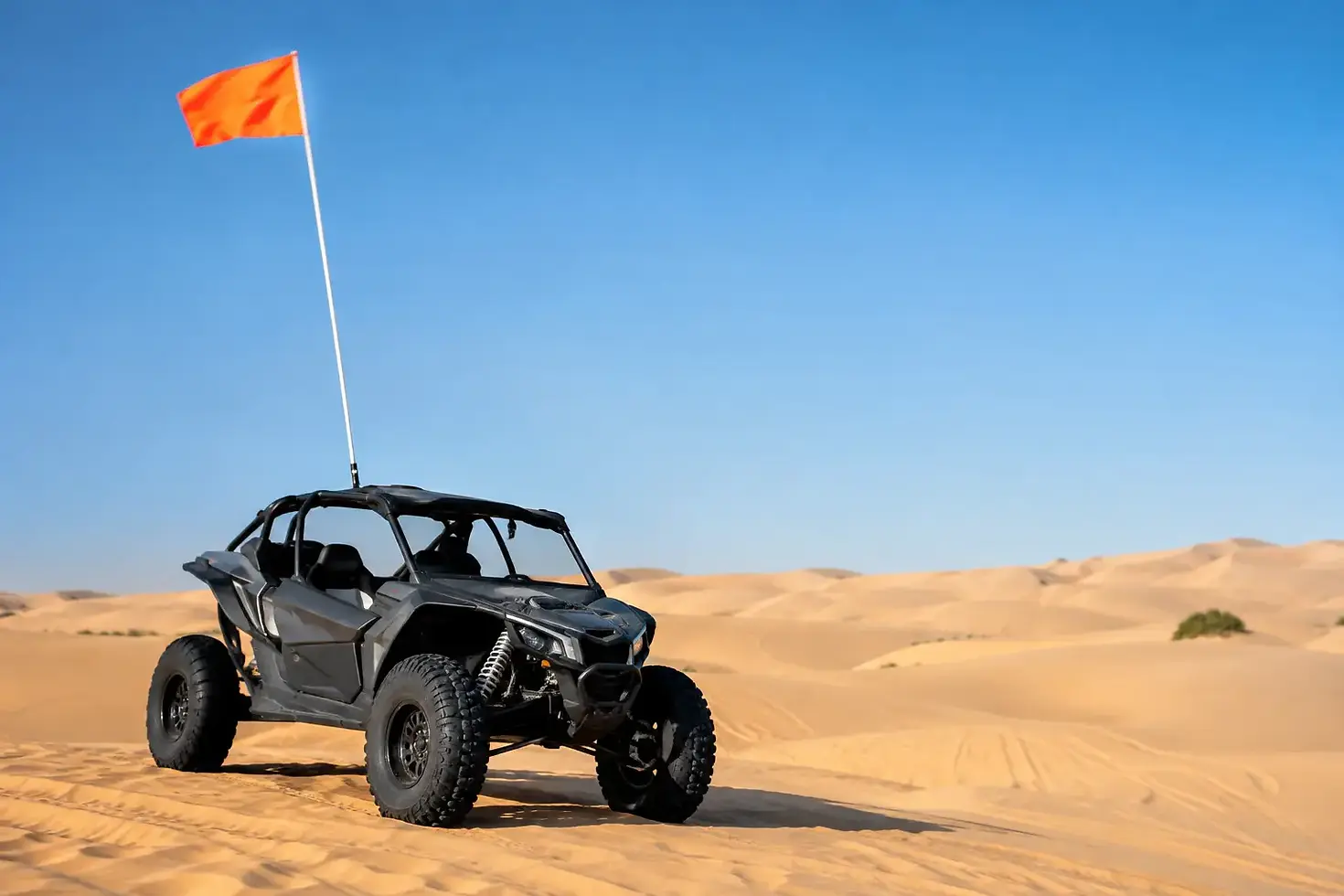
A dune flag is not decoration. It is the tall, bright signal that gives riders coming over the next ridge a chance to see you before both bikes reach the same line. When the wind is up, the sand is chopped, and the bike is working hard, the difference between a good whip setup and a frustrating one shows up fast.
Fiberglass aluminum flagpoles are a common answer because they combine a flexible upper section with a stiff, mountable base. That combination can work extremely well on a dirt bike or ATV, but only if the pole length, flag, mount, and riding conditions are matched. A quality flagpole can still be a bad setup if it rattles loose, blocks access to the bike, or puts leverage on a weak mounting point.
Why fiberglass aluminum flagpoles work at the dunes
Fiberglass and aluminum do different jobs. Fiberglass has controlled flex. It bends with wind, brush, and the occasional low clearance moment rather than transferring every hit directly into the bike or snapping like a rigid tube. That makes it the natural choice for the tall portion of a dune whip.
Aluminum brings stiffness where it counts. It is often used in the lower tube, base, sleeve, or mounting hardware because it holds its shape and gives the whip a solid connection point. A properly built aluminum section also resists corrosion better than untreated steel when sand, moisture, and washdowns are part of the routine.
For riders, the appeal is simple: get enough height to be seen, enough flex to survive normal movement, and a base that does not turn every rough section into a loose-hardware problem. The materials are only part of that equation. The way they are assembled matters just as much.
Flex is useful, until it becomes uncontrolled movement
A whip should move. That is normal. A tall fiberglass rod will arc in the wind and oscillate after a hard landing. The problem starts when the entire assembly moves at the mount, or when a loose-fitting sleeve lets the pole slap around before the fiberglass can do its job.
Too much movement can fatigue the pole, wear through coatings, loosen bolts, and make the flag less visible because it is sitting at an inconsistent angle. A stable base lets the fiberglass flex above it. That separation is what keeps a whip practical instead of annoying.
Start with your riding area, not the pole
Before picking a flagpole, check the rules for the dunes and riding areas you visit. Height, flag color, flag dimensions, and mounting requirements can vary by location. Some areas have specific requirements for visibility flags, while others may have rules that change by season, event, or vehicle type.
Do not assume a whip that worked at one riding spot is compliant everywhere. Measure from the ground with the bike on its wheels, not from the fender or seat. A tall-looking pole in the garage can sit much lower once suspension sag, tire size, and mount location enter the picture.
The riding terrain also changes what you need. Open dunes usually reward more flag height because lines disappear behind bowls and ridges. Tight trails, tree-lined access routes, and enclosed trailers can make an extra-tall rigid setup less convenient. That does not mean skipping the flag. It means choosing a setup that can be removed, stored, or lowered without a wrench session.
The mount matters more than most riders expect
The common failure point is rarely the flag itself. It is the attachment point. A tall whip creates leverage, and rough terrain multiplies that leverage every time the rear end bucks, bottoms, or steps sideways in a rut.
Axle-mounted options can be simple, but they put the whip low and expose the hardware to dirt, sand, and wheel-area abuse. Fender-mounted setups can be quick, yet thin plastic was never designed to carry the repeated load of a tall pole swinging behind the bike. Both approaches can work in limited situations, but they often create the same familiar problems: cracked plastic, bent hardware, a whip that leans, or a removal process that turns into a project.
A purpose-built mount should hold the flagpole close to a strong part of the bike while keeping it clear of the tire, exhaust, side panels, and your normal loading routine. It should also let you remove the whip quickly when the ride is over. Riders should not have to choose between complying with dune rules and being able to fit the bike into a truck or trailer.
ZENxTEN's MX/Dune Whip Mount is built around that exact problem: a stable, tool-free way to mount and remove a safety flag without relying on the axle or asking a rear fender to carry the load.
Check clearance through the whole suspension range
Do not check whip clearance only with the bike on a stand. Put the bike on the ground, compress the suspension, and look at the relationship between the mount, rear tire, exhaust, and plastics. A flagpole that looks clear at full extension may move into a bad spot under compression.
Also account for the flag itself. A large flag can whip backward at speed and contact hot exhaust components if it is mounted too low or too close. Heat damage is not always obvious after one ride, but repeated contact can weaken fabric, fade color, and leave you replacing gear that should have lasted.
Choosing the right pole length and flag
More height is generally better for visibility, but there is a practical limit. A very long pole sees more wind load and creates more leverage at the mount. If you ride fast, hit rough faces, or haul through low-clearance spaces, the tallest option is not automatically the smartest option.
Choose the height needed to meet local rules with a margin for suspension sag and real-world visibility. Then choose a flag that stays bright and readable against the terrain. Fluorescent orange is common for a reason: it stands out against blue sky, tan sand, and most riding gear. If local rules specify a color, use that requirement over personal preference.
Look for a flag with reinforced attachment points. A thin flag with one weak grommet may be fine while parked, then tear when it catches a strong crosswind on a ridge. Reinforced stitching and secure fasteners help, but avoid creating a hard metal edge that can wear through the fiberglass rod over time.
Setup details that prevent trailhead headaches
A clean setup begins before the first ride. Make sure the fiberglass section is fully seated in its base, the aluminum hardware is tightened to the mount manufacturer’s specification, and any quick-release retention feature is engaged. If the pole uses a pin, clip, or knob, inspect it every time you install the whip.
Sand is abrasive. It finds its way into sleeves, threads, and moving hardware, then turns a smooth release into a gritty fight. After a ride, rinse the mount area with low-pressure water, let it dry, and inspect for packed sand. A quick check takes less time than trying to free a seized part in the staging area next weekend.
Pay attention to the fiberglass itself. Small splinters, deep scratches, whitening, or exposed fibers are signs that the rod has taken damage. Fiberglass does not always fail with a dramatic snap. It can gradually weaken until one hard hit finishes the job. Replace a compromised pole before it becomes a safety issue or leaves a loose piece behind on the trail.
For aluminum components, watch for bent brackets, ovalized holes, loose fasteners, and corrosion around contact points. Aluminum is light and strong for this use, but it is not magic. Repeated side loading from a loose whip can deform almost any mount over time.
Match the setup to how you actually ride
A family cruising groomed dunes needs a different setup than a rider charging steep bowls on a 450. The first rider may value fast removal and easy handling most. The second needs a mount that stays put through aggressive suspension movement, vibration, and hard acceleration. Both need a flag they can trust.
If you switch between dunes, moto tracks, and trail rides, convenience becomes a bigger factor. A detachable whip lets you keep the bike clean and snag-free when a flag is not required, then get ready at the dunes without digging for tools. That is not a luxury feature. It is what makes safety gear more likely to be installed correctly every time.
The best fiberglass aluminum flagpole setup is the one you forget about while riding because it stays secure, stays visible, and comes off without drama when the day is done. Set it up carefully, inspect it often, and let the flag do what it is there to do: give other riders one more second to see you over the next hill.


Comments