
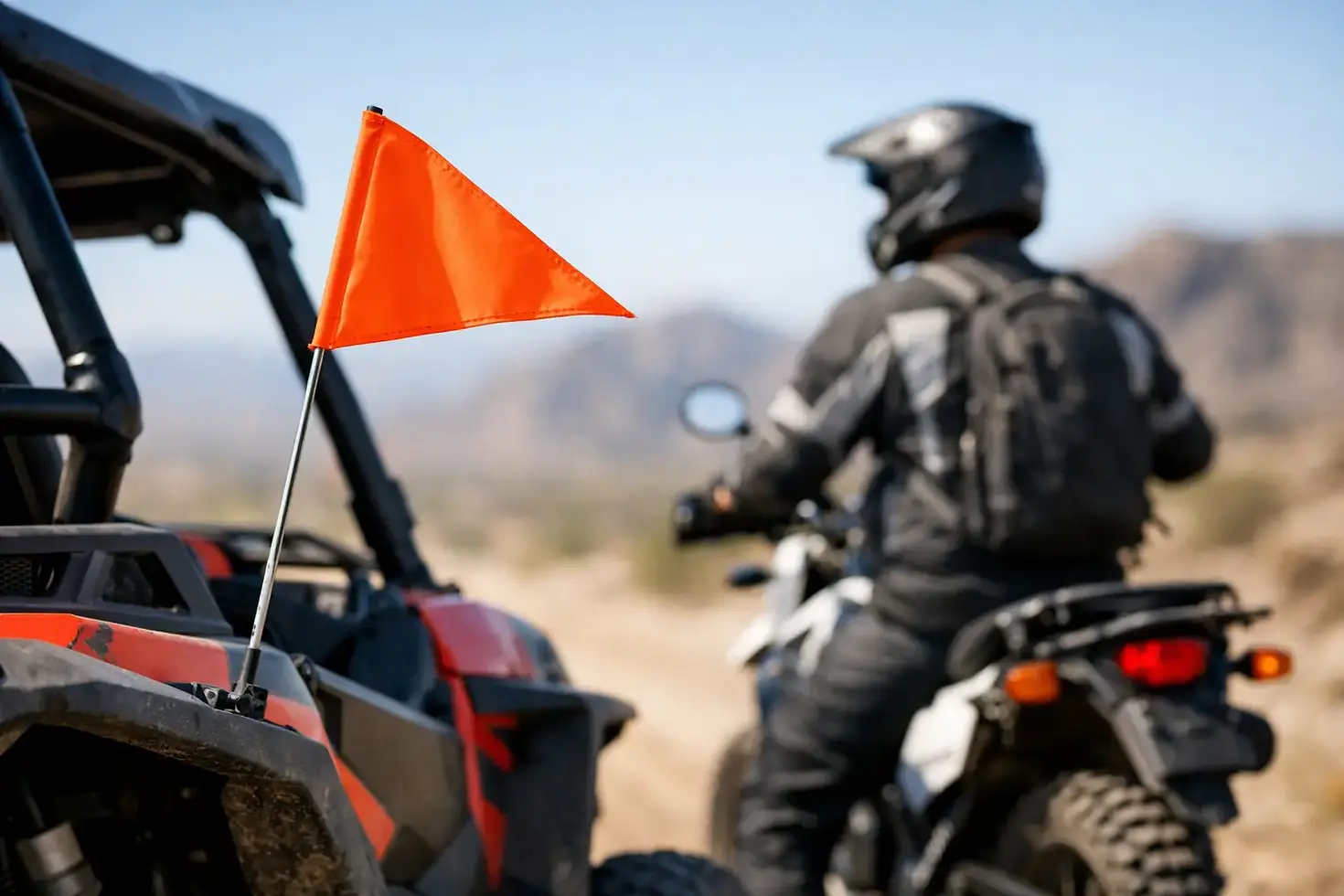
How to Prevent Motorcycle Safety Flag Breakage
A snapped safety whip halfway through a dune ride is more than an annoying gear failure. It can leave your bike harder to spot over a blind crest, put you out of compliance with local riding rules, and turn a great day of Moto into a repair mission. To prevent motorcycle safety flag breakage, start with the part that takes the hardest hits: the way the whip is mounted to the bike.
A flag whip is built to flex. The mount is what decides whether that flex stays controlled or becomes a leverage point that bends hardware, cracks plastic, or launches the flag into the sand. Riders often replace broken whips without fixing the setup that broke the first one. Get the mounting position, fit, and routine right, and your flag setup will stand up to a lot more dune time.
Why Motorcycle Safety Flags Break
Most breakage comes from repeated vibration and leverage, not one dramatic impact. A tall whip catches wind at speed, shakes through chop, and gets pulled sideways when the bike bucks through whoops or drops into soft sand. Every bit of movement transfers force into the base.
Axle-mounted and fender-mounted setups can create problems when the whip sits in a vulnerable spot. An axle location may place the flag low and behind the bike, where it is exposed during loading, unloading, tight trailering, and tip-overs. A fender mount can flex with the plastic, especially when the whip is tall or the terrain is rough. That flex works fasteners loose and puts stress into the fender instead of a solid mounting point.
The usual failure points are easy to recognize:
A cracked whip base caused by the flag bending against a rigid or poorly aligned bracket.
Loose hardware that lets the mount rattle until bolt holes widen or threads wear.
A bent bracket that changes the whip angle and creates more side load on every bump.
Fender cracks or torn plastic around mounting holes.
A whip damaged during transport, when straps, tailgates, or another bike press against it.
The goal is not to make the whip completely immovable. A good setup gives it a secure foundation while allowing the whip itself to do the flexing it was designed to do.
Prevent Motorcycle Safety Flag Breakage at the Mount
The strongest safety flag setup starts with a mount attached to a stable section of the bike, away from parts that flex, rotate, or take regular contact. For dune riders, that typically means choosing a purpose-built mounting solution that holds the whip upright without relying on thin fender plastic or awkward axle hardware.
Mount position matters just as much as material. The flag needs to clear the rider, seat, exhaust, rear tire, and any gear strapped to the bike. If the whip leans into your body while standing, it is not just distracting. You may eventually push it aside with your leg, adding side load that the mount was never meant to handle.
Look at the whip from the side and rear before heading out. It should stand straight or follow the mount's intended angle, with room to flex without contacting the bike. If it is already tilted because the bracket is bent, the fasteners are loose, or the whip does not fit the receiver correctly, fix that before riding. A small lean becomes a big problem when wind and whoops get involved.
A rider-focused system such as the ZENxTEN MX/Dune Whip Mount is designed around this exact issue: a stable, tool-free attachment point that keeps the flag accessible without the common interference and breakage risks of axle and fender mounts. The advantage is not simply faster installation. It is having a consistent, secure home for the whip every time you load up for the dunes.
Match the Whip to the Mount
Not every whip base uses the same diameter, retention pin, threaded connection, or locking method. Forcing a whip into a receiver that is too tight can damage the base. Running one that is too loose lets it chatter, wear the connection, and eventually pop free.
Before your first ride with a new setup, insert the whip fully and confirm the retention method is engaged. If a pin, clip, or locking collar is part of the system, make sure it seats cleanly. Do not assume it is secure because the whip feels snug while the bike is parked. Grab the whip near its base and apply gentle side-to-side pressure. You are checking for unwanted movement at the connection, not trying to bend the whip over.
Whip height is also a trade-off. Taller flags improve visibility over dune faces and crowds, but they generate more leverage at the mount. Use the flag height required for your riding area, then make sure your mount is rated and positioned for that job. If local rules specify a minimum height or flag size, follow them rather than guessing.
Tight Hardware, Not Overtight Hardware
A loose mount is an obvious problem. An overtightened mount can be just as bad, particularly when bolts pass through plastic or clamp onto a component that can be crushed or distorted. The right approach depends on the mounting system and the bike, so follow the hardware guidance for your specific setup.
Check mounting bolts after the first ride, then again after a few hard sessions. New hardware can settle, especially after heat cycles, vibration, and the repeated flex of dune riding. If bolts keep backing out, do not just crank them down harder. Inspect the bracket for movement, confirm the fastener length is correct, and use the appropriate thread-locking method if the mount instructions call for it.
Pay attention to the surface under the mount. Sand, mud, and powder-coated grime can keep a bracket from sitting flat. Clean the contact area so the mount is supported evenly. A bracket that rocks slightly when installed will work loose no matter how often you tighten it.
Protect the Flag During Transport and Storage
Plenty of safety whips break before the first ride. The common culprit is transport. A whip can snag on a garage door, trailer roof, loading ramp, fuel can, or another bike as you move equipment around. Even a quality mount cannot protect a whip that gets pinned under a ratchet strap.
If your system is designed for quick removal, take advantage of it before loading. Remove the whip, secure it where it cannot bend, and reinstall it at the riding area. This also keeps the flag from catching wind on the highway or striking the trailer ceiling over every bump.
When the whip stays installed for a short move, verify that it clears the trailer roof and any overhead rack. Watch for contact when the suspension compresses as the bike rolls up a ramp. It only takes one hard snag to crack a base that looked fine in the driveway.
Storage deserves the same attention. Do not lean heavy gear against the whip or leave it bent under a shelf. Store the flag straight, dry, and away from direct heat when possible. Sun, heat, and time can make some materials less forgiving, especially if the whip already has a crease or crushed section.
Use a Fast Pre-Ride Check
You do not need a shop inspection before every run. A 30-second check catches most problems before they become breakage. Confirm that the whip is fully seated, the mount is not loose, and the flag is visible and intact. Then look for fresh cracks, bent metal, stretched holes, or rubbing marks where the whip may be hitting the bike.
After a rollover, a hard crash, or a close call with a tree or trailer, check it again. A mount can look normal from a distance while a small crack is forming at the base or a retention pin has been bent. Replace damaged parts early. Trying to squeeze one more weekend from a compromised bracket usually costs more than fixing it in the garage.
Ride Hard, Let the Setup Do Its Job
Dune riding puts real stress on every accessory. Your safety flag should not demand constant attention when you are focused on line choice, visibility, and keeping pace with your crew. A whip that is properly matched, securely mounted, protected in transport, and checked before the ride has a much better chance of staying where it belongs.
Set it up once with intention, then give it a quick look before each ride. That small habit keeps a broken flag from stealing time out of the day you came to ride.


Comments