

Sand Dune Riding Accessories That Earn Their Spot
A dune day can go sideways before the first climb if the gear on your bike is loose, buried in sand, or blocking the way. The best sand dune riding accessories do more than add stuff to your setup. They keep you visible, protect the rider, and solve the small problems that can cut a ride short.
Dunes punish generic equipment. Vibration shakes hardware loose, sand works into every moving part, wind loads up a whip flag, and one unexpected bottom-out can expose a weak mount. Buy for the conditions you actually ride, not for a clean garage photo.
Sand Dune Riding Accessories Start With Visibility
A safety flag and a dependable way to mount it are at the top of the list for a reason. On a busy dune face, riders can approach from opposite sides with very little warning. A tall, visible whip helps other riders spot you before they see the bike.
Rules differ by riding area, so check the requirements where you ride. Flag height, color, and placement can all matter. Even where a flag is not required, visibility is still a smart move when the dunes are crowded, sightlines are short, or weather turns flat and dusty.
The part riders often overlook is the mount. A good flag is only useful if it stays upright and stays attached. Axle-mounted options can sit low, take hits, and complicate wheel service. Fender-mounted setups may flex, interfere with bodywork, or put repeated stress on plastic that was never meant to carry a loaded whip.
A purpose-built mount should hold the whip securely while keeping it out of the rider's way. It should also come off quickly when the bikes are loaded up for the trip home. Tool-free removal is not a luxury when you are packing in sand, fading daylight, and a group that is ready to roll.
ZENxTEN's MX/Dune Whip Mount is built around that exact use case: a stable, fast-on, fast-off flag solution that avoids the usual axle and fender headaches. The point is simple. Your safety gear should not become the weak link on your bike.
Match the whip to your riding conditions
A taller whip generally improves visibility, but height also creates more leverage on the mount in high wind or rough chop. A lightweight whip can be a better call for aggressive riding if it still meets the rules at your riding spot. Inspect the pole, flag, retention point, and mount before every trip. A cracked whip or worn fastener rarely fails while the bike is parked.
Protect the Rider Before Adding Convenience Gear
The dunes look soft, but a crash can still be hard. Hidden drop-offs, deep ruts, crosswinds, and changing light demand the same serious approach you would bring to a fast moto track.
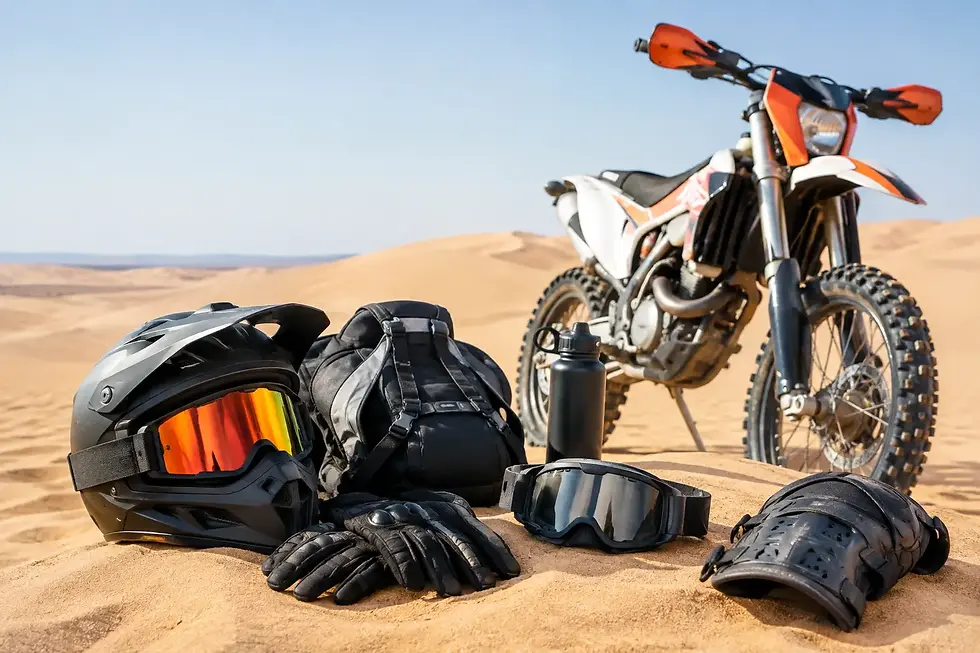
Start with a properly fitted helmet, goggles that seal well against dust, gloves, boots, and knee protection. A chest protector or upper-body protection makes sense for riders pushing speed, hitting transitions, or riding in dense traffic. The right setup depends on your bike, pace, and terrain, but boots and eye protection are not places to compromise.
Goggles deserve extra attention. Fine sand gets past weak foam, scratches lenses, and turns a clear view into a blurry mess fast. Bring a spare lens or a second pair if conditions are expected to change. Tinted lenses can help in harsh sun, while clear lenses are useful when a late ride runs into dusk. The best choice depends on the forecast, but having no backup is a bad choice.
Hydration is another accessory that earns its place. A backpack-style hydration pack keeps water close without needing to stop and dig through a cooler. Choose one that stays planted when you stand, sit, and move around on the bike. A loose pack can distract you at exactly the wrong moment.
Keep Your Bike Running in Sand
Sand riding asks more from your machine than a normal trail loop. The bike works harder, the engine runs hotter, and traction changes every few feet. A few compact accessories can save a long walk back to camp.
Carry a small tool roll with the basics for your own bike: the correct wrench sizes, tire tools if you are equipped to use them, a plug kit for applicable tire setups, zip ties, electrical tape, and a master link if your bike uses a chain. Add a small air gauge. Tire pressure can make a major difference in soft sand, but there is no single magic number. Rider weight, bike weight, tire construction, speed, and how chopped-up the dunes are all change the answer.
A compact pump is useful if you adjust pressure at the riding area. Just make sure it is protected from sand and secured where it cannot rattle loose. The same goes for fuel bottles and cargo bags. Every accessory needs a real mounting plan. Bungee cords alone are not a plan for rough dunes.
Air filtration deserves attention, too. A clean, properly oiled filter is cheap insurance in sand. Bring a spare pre-oiled filter in a sealed bag for multi-day trips, especially if your group rides hard or follows close together. Keep the spare clean until you need it. An uncovered filter stuffed in a gear bin is not a spare - it is a future engine problem.
Choose cargo that stays put
The best dune cargo is compact and secure. A well-fitted fender bag, small rear bag, or rider-worn pack can work, depending on your bike and the gear you need. Avoid piling weight high and far behind the rear axle. It can make the bike feel less settled when the dunes get rough.
Pack the items you need first: water, communication, basic tools, a small first-aid kit, and any required permits or identification. Then add comfort items only if there is room. The more gear hanging off the bike, the more chances you create for snagging, bouncing, or losing something in the sand.
Communication and Recovery Gear Matter in a Group
Dune riding is better with a group, but groups get separated. A phone in a protected case is a baseline, not a full plan. Service can be weak, batteries drain in heat, and a phone can disappear quickly in a crash.
For bigger riding areas, consider a satellite communicator or another device that works beyond cell coverage. A handlebar-mounted GPS can help with orientation, though it needs a mount designed to resist vibration. If you use a phone for navigation, carry it in a location you can reach without taking your eyes off the terrain for too long.
Set a meet-up point before the first ride. Agree on what happens if someone is late, injured, low on fuel, or separated from the group. This is not overthinking it. Dunes constantly change the landscape, and familiar routes can look different after wind or heavy traffic.
Recovery gear depends on what you ride. Side-by-side crews may need tow straps and more substantial equipment. Dirt bike riders usually benefit more from lightweight tools, water, and a way to communicate than from loading the bike with heavy recovery hardware. Carry what fits your vehicle and riding plan.
What Not to Buy for a Dune Trip
The wrong accessory is often one that creates a new problem. Skip mounts that require a pile of hardware every time you install or remove them. Avoid sharp, poorly placed brackets that can catch gear or interfere with your body position. Be cautious with universal products that claim to fit every bike but were not designed around vibration, whip load, or actual dune riding.
Also resist the urge to over-accessorize. A clean, dependable setup beats a bike covered in gadgets. If an item does not improve visibility, safety, bike reliability, communication, or comfort over a long day, it may be better left at camp.
Before the next trip, do a quick shake-down in the driveway. Install the flag, load your pack, turn the bars lock to lock, compress the suspension, and look for interference. Then give every mount a hard pull. That five-minute check can keep your gear where it belongs when the dunes get rough.


Comments